In an economic landscape marked by growing instability and increasingly complex dynamics, the ability to effectively plan and manage the supply chain has become a key factor in business competitiveness. Italian companies must cope with constant volatility, sudden disruptions, and a digitalization process that, although underway, has not yet reached full maturity.
The tensions of recent years have challenged many of the models traditionally adopted by Italian companies, highlighting the need to rethink processes and competencies. Organizations are increasing their investments in technologies that foster data integration and visibility. At the same time, artificial intelligence is beginning to find its place in supply chain management as a potential lever for addressing emerging issues, although widespread adoption still requires time, awareness, and a thoughtful redesign of operating models.
It is precisely in this context that Vertical Lift Modules (VLMs) take on a strategic role: they are no longer simple tools for logistical optimization, but true digital hubs capable of generating valuable information and significantly contributing to the resilience of the entire supply chain and the evolution toward Logistics 4.0.
Why Supply Chain Planning Has Become Essential
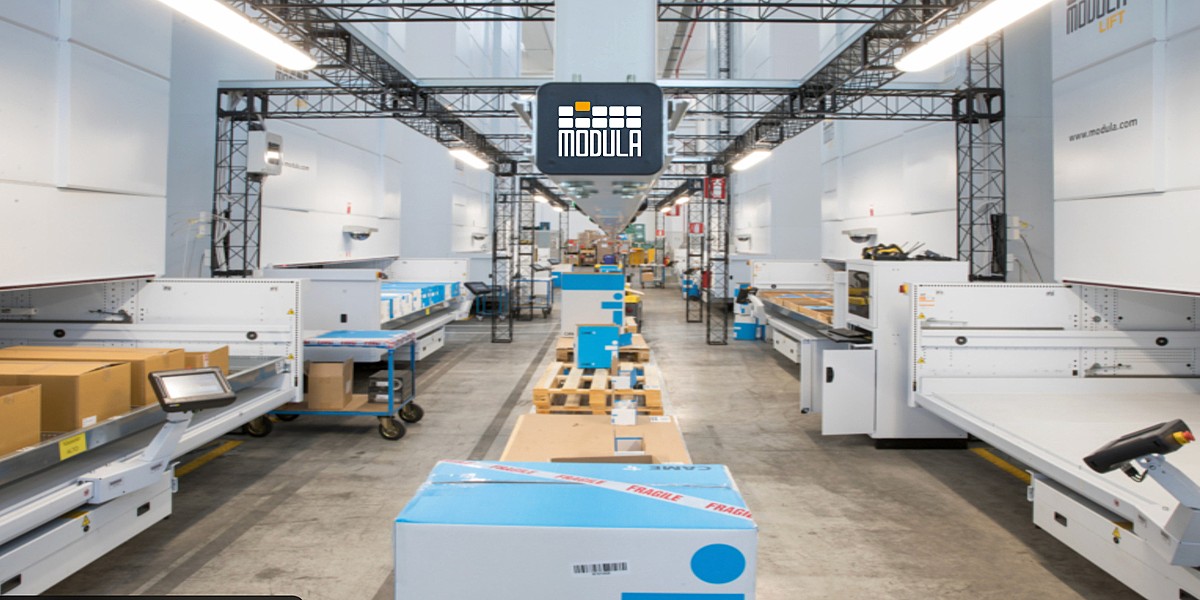
Supply Chain Planning (SCP) encompasses the strategic and operational activities that make it possible to integrate and coordinate suppliers, production, logistics, and distribution. It is not just about managing inventory, but about forecasting demand, optimizing production capacity, and orchestrating flows throughout the supply chain with a digital-first approach. When Vertical Lift Modules are integrated into planning systems, they become a central node for:
- Improving real-time visibility of stock levels
- Reducing handling times thanks to automated picking processes
- Obtaining accurate data to support faster, fact-based decisions
- Increasing responsiveness to sudden changes in demand through smart warehousing processes
The Five Pillars of Modern Planning
An advanced approach to Supply Chain Planning, supported by vertical automation technologies, is built on five key areas:
- Demand Planning
Forecasting future trends and synchronizing warehouse operations based on historical data and market signals through advanced forecasting systems. - Supply Planning
Aligning production capacity, procurement, and supplier availability with actual operational needs. - Production Planning
Scheduling production cycles efficiently, avoiding bottlenecks and reducing waiting times to improve lean supply chain processes. - Inventory Planning
Maintaining optimal stock levels by leveraging VLMs to reduce errors and waste. - Distribution Planning
Optimizing routes and delivery times by integrating WMS, TMS, and ERP systems to achieve full visibility and a comprehensive integrated logistics model.
Tangible Benefits for Logistics, Costs, and Sustainability
A well-designed integration between Vertical Lift Modules and supply chain planning provides numerous advantages:
- Reduction of operating costs through the elimination of manual and redundant activities
- Improved customer service with more punctual and accurate deliveries
- Greater resilience to better face crises, disruptions, or demand peaks
- Support for ESG goals by reducing waste and optimizing energy consumption and transport within a sustainable logistics framework
Enabling Technologies and the Power of Integration
A real step forward in supply chain management is achieved when information systems communicate with each other across the entire value chain. The integration of ERP, WMS, APS, and Artificial Intelligence solutions makes it possible to create a coherent ecosystem in which planning, execution, and control are aligned toward an integrated supply chain model.
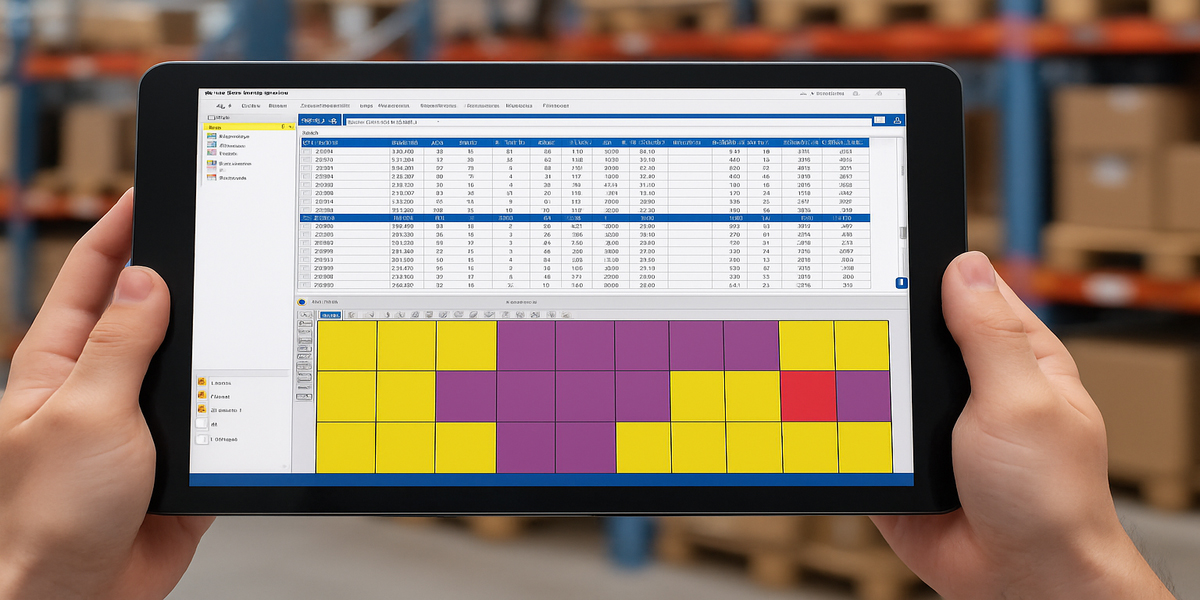
- ERP provides a centralized view of processes, ensuring consistency between demand, production, and procurement.
- WMS accurately coordinates warehouse activities, optimizing flows, resources, and time.
- APS and predictive models support advanced analysis, scenario simulations, and dynamic optimization.
When these tools are powered by data coming from Vertical Lift Modules—systems that ensure precision, traceability, and real-time updates—the entire supply chain benefits from end-to-end visibility that was previously difficult to achieve, enabling fully data-driven supply chain strategies.
However, not all organizations yet have complete integration: many operate with partially connected or even fragmented systems, with direct impacts on information quality and coordination capabilities. Vertical Lift Module can nevertheless be effectively integrated with both manual processes and fully automated systems, acting as a bridge between different automation levels and enhancing operational scalability.
Automation, which is now widespread in operational activities and data collection, is evolving toward more intelligent forms such as advanced Robotic Process Automation, but adoption remains uneven. The main obstacle is not only financial: there is often a lack of clear data governance, shared rules, and organizational models capable of supporting digital transformation. Overcoming these barriers means creating an environment in which technologies like Vertical Lift Modules can fully express their potential, contributing to a more agile, controlled, intelligent logistics framework increasingly oriented toward industrial and logistic digital transformation.
Artificial Intelligence as a Lever for More Accurate Planning
AI applications in the supply chain focus primarily on predictive analytics: improving forecast accuracy, optimizing inventories and production plans, and anticipating anomalies or demand fluctuations. More advanced solutions—such as fully autonomous systems or computer-vision-based models—are still in their early stages, limited by insufficient expertise and immature data structures.
AI is therefore perceived mainly as a tool for incremental improvement rather than a lever for radical redesign, yet it remains central to intelligent automation strategies.
Within this context emerges Modula Optimizer, an advanced feature that represents a concrete example of how AI can tangibly enhance operational efficiency.
By using sophisticated algorithms that map relationships between items, Modula Optimizer improves product placement within the VLM and reduces the number of tray movements required during picking. This is made possible by a new scheduling system dedicated to order management, enabling more accurate and consistent performance aligned with project-phase simulations.
Among the main capabilities offered by Modula Optimizer are:
- Order and SKU placement optimization:
The software generates a correlation map between items, identifying those most frequently picked together and analyzing their rotation levels. This data makes it possible to define the optimal placement of SKUs, speeding up picking operations and minimizing unnecessary tray movements—key to optimizing VLM performance. - Picking optimization and VLM rotation management:
Starting from a predefined set of orders, the system selects those that can be processed in the most efficient way, with the goal of reducing tray movements and boosting the overall performance of the VLM. Thanks to constant monitoring of VLM status, it is also possible to process highly compatible orders in parallel. This feature is available through an annual pay-per-use license.
For advanced AI-based solutions to become an integral part of planning processes, coordinated investments in technology, training, and human capital management are essential. Companies must create an ecosystem capable of harmoniously integrating intelligent tools, ensuring data reliability, process readiness, and adequate skills to interpret and leverage information.
The ability to combine innovation with the empowerment of people will be crucial to respond swiftly to change and to turn uncertainty into opportunity, within a resilient supply chain context.
From Reactive Management to Proactive Risk Management
Recent global crises have shown how risky it is to rely on a purely reactive approach to supply chain management. The integration of digital systems, predictive algorithms, and data from Vertical Lift Modules enables companies to anticipate issues and implement more robust strategies.
Thanks to this synergy, it becomes possible to:
- detect potential disruptions or inefficiencies in advance
- assess alternative scenarios and promptly choose the best course of action
- react quickly to unexpected events while maintaining high service levels and strengthening logistics risk management
People and Skills: Transformation Begins from Within
The digital transformation of the supply chain is not driven by the intention to replace human capital, but by the desire to empower people to focus on high-value, strategic activities aligned with the needs of modern logistics.
In this journey, training becomes an essential lever. Italian companies tend to manage most transformation projects internally, relying on their deep knowledge of internal processes. However, not all organizations possess the technical and managerial maturity needed to fully benefit from new technologies. The gap between those investing in a structured way and those postponing targeted interventions highlights the need for broader training programs—programs that combine technical development with managerial, methodological, and data-driven skills to enable a true digital supply chain culture.
In this direction, Modula’s training offering provides concrete support: a modular, step-by-step introduction that accompanies companies through change without disruption, allowing them to experiment, consolidate, and then scale new skills. Only in this way is it possible to move beyond a reactive operational approach and shift toward planning based on scenarios, simulations, and real-time information.
The role of people therefore remains pivotal.
Choosing to manage change internally reflects trust in internal capabilities but also requires continuous investment to ensure that teams are prepared to face increasingly complex environments with flexibility, an innovative mindset, and adaptability—within a collaborative supply chain ecosystem.
In this perspective, the integration between supply chain processes and Vertical Lift Modules represents a shared evolution in which processes, technologies, and professional skills grow together. Truly intelligent logistics can only emerge from the combination of technological innovation and skill development, transforming people into real drivers of change and ensuring a more efficient, resilient, future-ready supply chain that is fully aligned with Logistics 4.0 principles.
Supply Chain Planning and ESG: What Does It Really Mean to Integrate Sustainability and Operational Efficiency?
Supply Chain Planning is a key element for turning sustainability into tangible value, contributing to ESG objectives and improving overall process efficiency. Accurate planning of procurement, production, and distribution helps reduce waste, energy consumption, and emissions, while optimizing resource usage and making the supply chain more resilient and aligned with sustainable supply chain criteria.
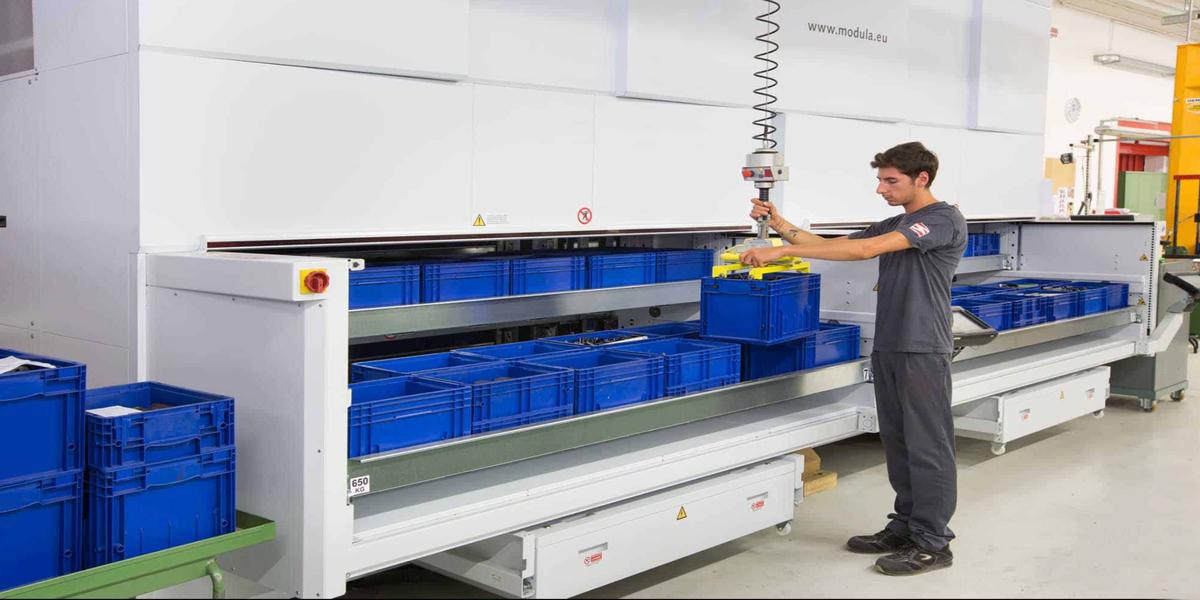
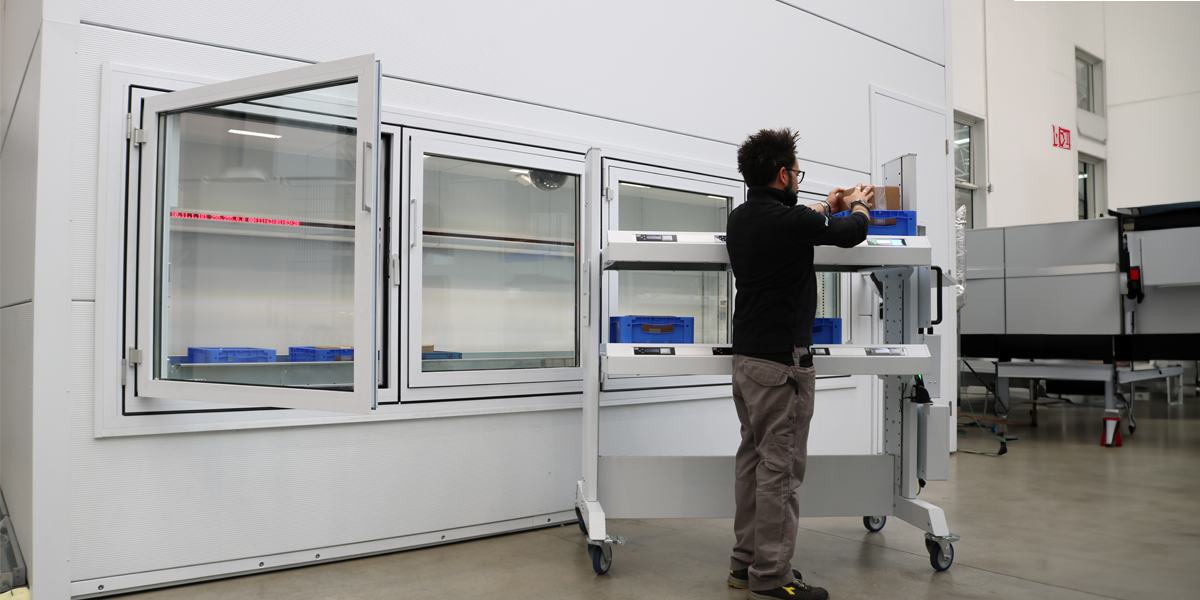
A significant contribution also comes from technological advancements in warehousing, such as the adoption of Vertical Lift Modules, which drastically reduce the required storage footprint. Less space translates into lower energy costs, reduced consumption (1.2 kWh), and a smaller environmental impact. At the same time, VLMs improve operational ergonomics and ensure better control over goods, reducing errors, excess inventory, and unnecessary movements—enabling greener logistics.
From a social perspective, Supply Chain Planning enhances transparency across the entire supply chain, ensuring fair and verifiable working conditions and promoting respect for human rights. A well-planned supply chain also strengthens governance through improved material traceability and more responsible, documented decision-making within an ESG governance model.
In summary, integrating an ESG strategy into Supply Chain Planning—even through innovative solutions such as VLMs—means building supply chains that are more sustainable, efficient, and human-centered.
Conclusion: Building a Vertical, Digital, and Resilient Supply Chain
The integration of Vertical Lift Modules with advanced Supply Chain Planning strategies is now a concrete lever for Italian companies seeking to optimize logistics flows, reduce operating costs, increase responsiveness to uncertainty, and improve logistics competitiveness.
These technologies make the supply chain more compact, faster, and easier to control, maximizing the value of space, data, and processes. Companies that can harmoniously orchestrate automation, predictive analytics, and people’s skills will build supply chains that are truly resilient, sustainable, and competitive—ready to face the challenges of the future market and implement a more efficient supply chain.
40 Warehouse KPIs to monitor and measure performance