The Production Process

A Global Production with an Italian Heart

90% of Modula’s Vertical Lift Modules (VLMs) are manufactured in-house, starting from raw materials and semi-finished components, through a highly digitalized and Made in Italy process.

Every Modula component is born from an integrated, controlled, and interconnected process that combines robotic technology, mechanical expertise, and craftsmanship-level attention to detail.

From raw sheet metal to the complete Vertical Lift Module, every stage is designed to guarantee quality, traceability, and long-term reliability.

A production system that speaks the language of Italian innovation — with a global outlook.

1. From Sheet Metal to the Heart of Modula: Trays and Panels

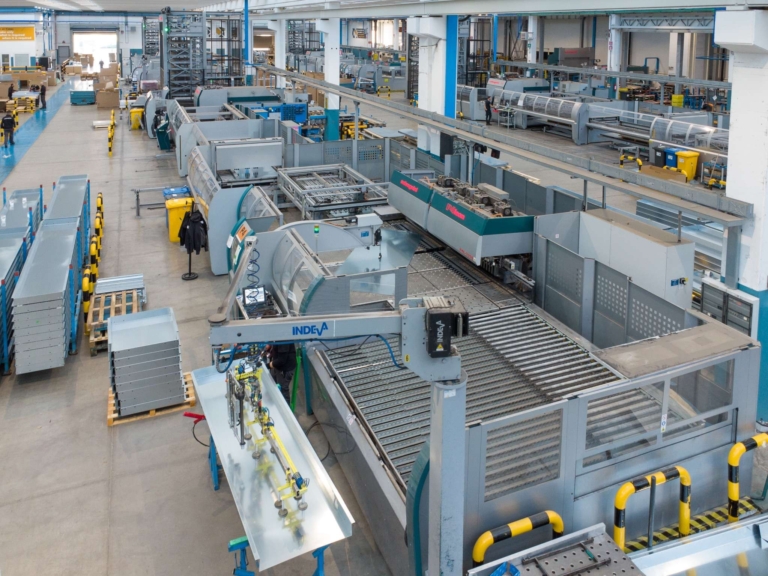
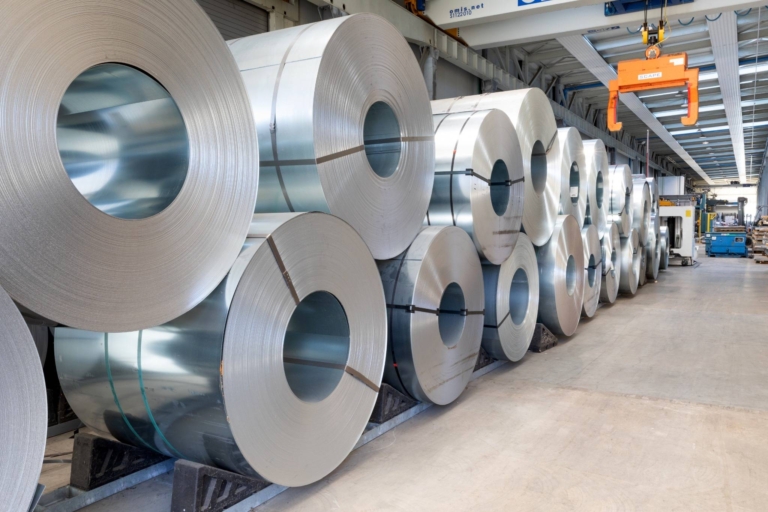
The production cycle begins with the flattening machine, where galvanized steel sheets are cut daily to create trays and vertical columns.

For external paneling, pre-coated sheet metal is used — galvanized steel covered with a colored PVC film.

The flattening machine operates one 8-hour shift per day, processing approximately 300 tons of galvanized steel and 12,000 m² of pre-coated sheet per week.

The coils are processed according to daily planning and transformed into steel blanks, which are then stored in warehouses serving the laser cutting, punching, and paneling departments — all located within the same facility — and transported using dedicated systems.

Six punching and paneling lines, working on the flattened blanks, are dedicated to producing panels and trays. The lines are identical and interchangeable: three for trays and three for panels. Each line achieves an average daily output of 350 trays and 500 panels.

novastilmec

Panel Production

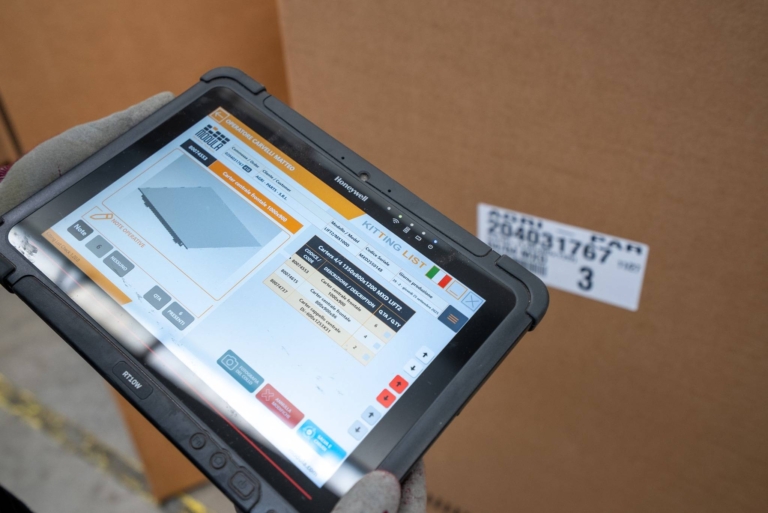
Panels are punched and bent within the plant and managed on a job-order basis, then immediately packed into cartons designated for the final customer, identified by barcode labels. Any waste is handled directly on the line to ensure order completeness and minimize downtime. The panels are then sent to the kitting area, where quality control and code verification are performed before shipment.

Controllo qualità

Trays Production

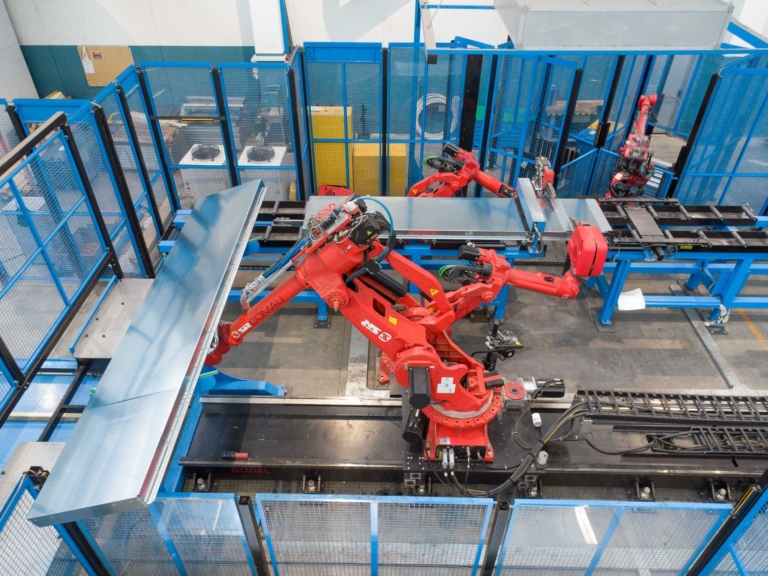
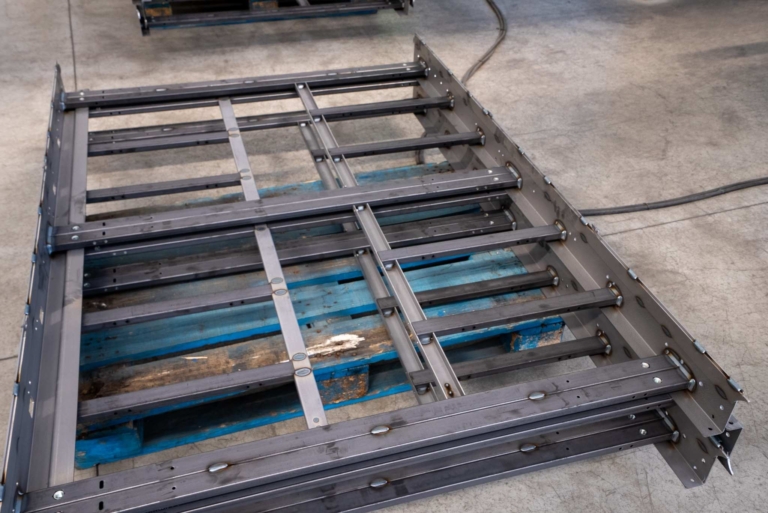
Trays follow a dedicated process: after punching and bending (performed on specialized lines, similar to the panels), they move to the reinforcement welding station, which consists of three robotic islands equipped with anthropomorphic robots that weld the “omegas” beneath the tray surfaces. These robots pick up and position the trays, welding the metal reinforcements onto the base to ensure strength and balance.

This phase is essential and depends on the load capacity of each tray, available in 250, 500, 750, and 990 kg versions, which determines the number of reinforcements required. For the DD trays with a depth of 1,257 mm, there is a dedicated island for the new product range where the “omegas” are mounted by anthropomorphic robots using the appropriate geometries.

After reinforcement, the trays proceed to the slide assembly station — the components that allow the tray to move within the Modula system. This phase is now automated thanks to two robotic islands equipped with an artificial vision system that precisely identifies the exact point on the tray where the slides must be installed. The camera captures the position, and the robot screws and secures the slides (four per tray) in the exact spots.

The final stage of tray production is packaging, after which the trays are sent directly to shipping.

How We Work
How We Work

2. Assembly, Wiring, and Testing of Lifters and Electrical Panels

In a specially designated area, the mechanical assembly, electrical wiring, and testing of the lifters and electrical panels take place.

Cablaggio

The Electrical Panel

The electrical panel, located at the base of our Vertical Lift Modules, is manufactured by a long-standing supplier and requires only final assembly.

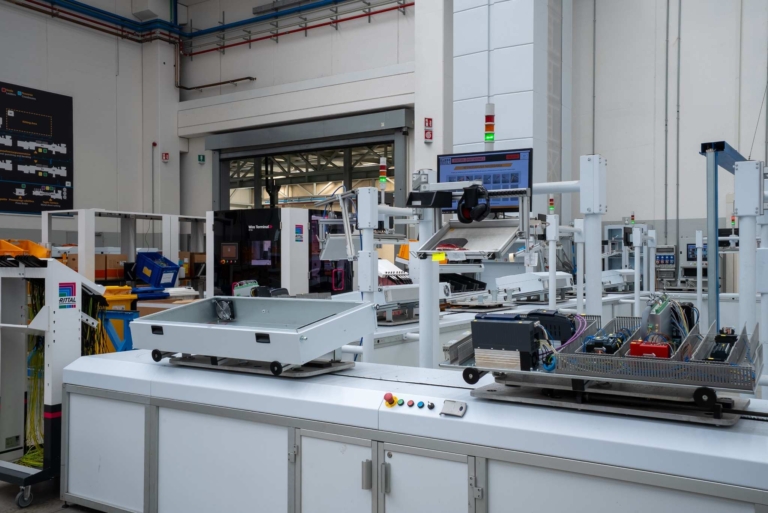
The dedicated assembly line consists of seven workstations, each equipped with an interactive monitor that guides the operator step-by-step through the various stages of assembling all components.

Each operator logs in using a personal badge, which activates the workstation for safety reasons.

Every station features two work positions to ensure operational continuity even in case of anomalies.

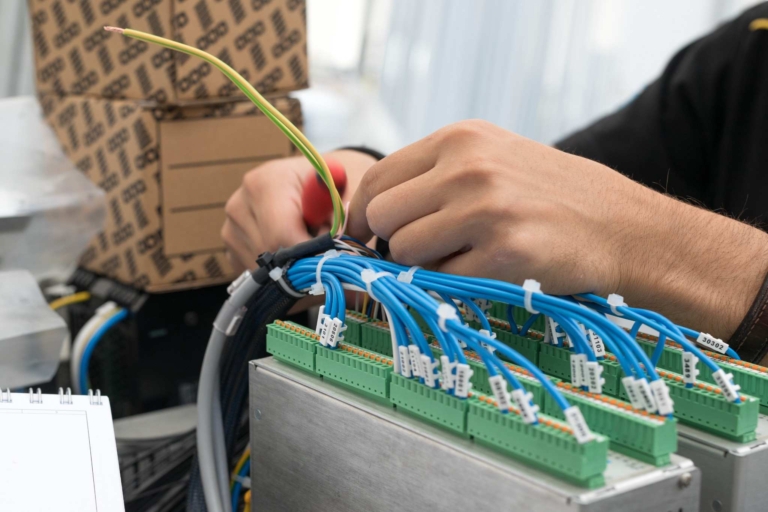
Next to the line is an innovative Rittal station where cutting, stripping, ferrule insertion, and marking take place in an integrated process that defines and tracks every cable using a dedicated code.

This system has eliminated the risk of false contacts during installation and improved wiring reliability.

Once completed, each panel undergoes testing.

The introduction of pre-connectorized cables has reduced installation times by approximately one and a half days.

In the electrical department, the lateral safety panels of the Modula system are also assembled and tested. These panels incorporate special coupling sensors designed to stop the machine’s operation if any panel is removed for safety reasons.
How We Work
How We Work

The Mechanical Department for the Lifter

Here, the lifter — the true “elevator” of the Modula system — is assembled, along with other mechanical preassemblies such as the door sides and motor units.

The receiving warehouse, located in a dedicated building, is composed of six Modula VLMs and a System Logistics stacker crane, managing up to 6,000 pallet positions.

Components are retrieved according to production requirements, optimizing workflow and maintaining inventory levels under control. Operators manually assemble the lifters with gearmotors and other mechanical elements.

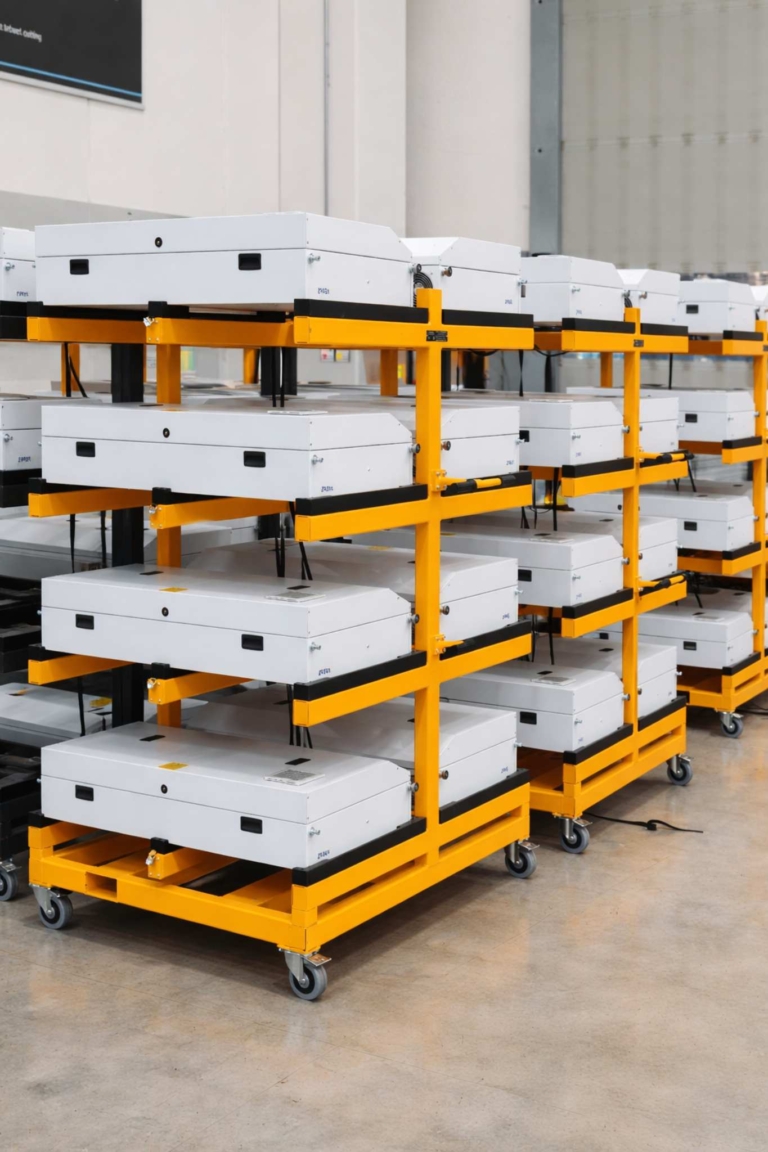
In the motor testing and kitting department, two Modula Pallet are used for motor storage — a solution that eliminates floor clutter, enhances handling safety, and optimizes operator workstation supply.

How We Work
How We Work

3. Structural Components and Dedicated Processes

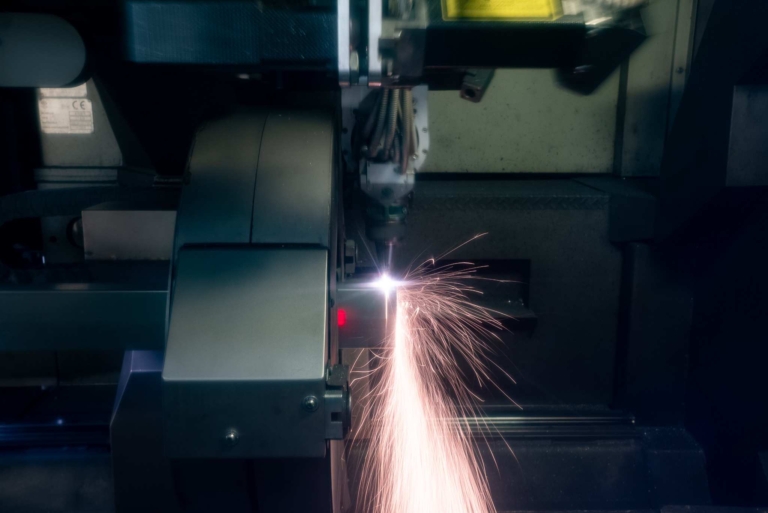
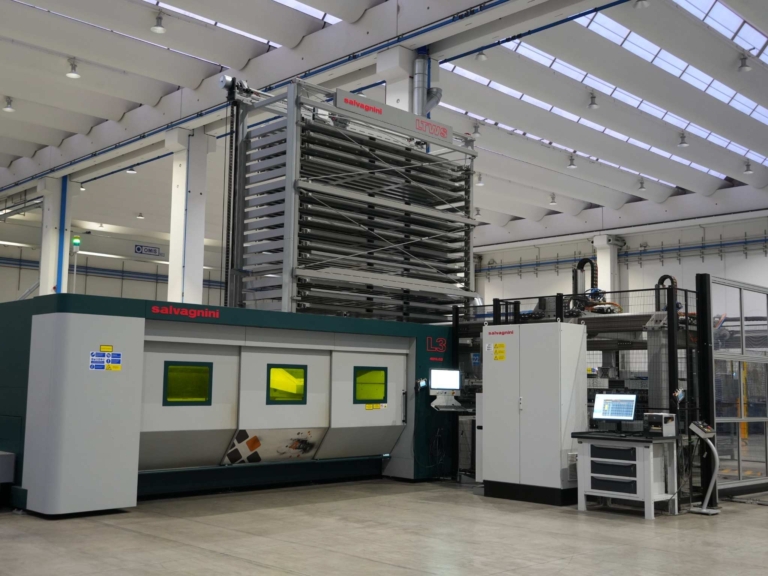
Next to the punching and paneling plants are three fiber laser cutting systems dedicated to cutting uprights, cross members, side panels, and ladders rails — all essential structural elements of the Modula VLM. These components are still produced in small batches under the direct supervision of the operator.

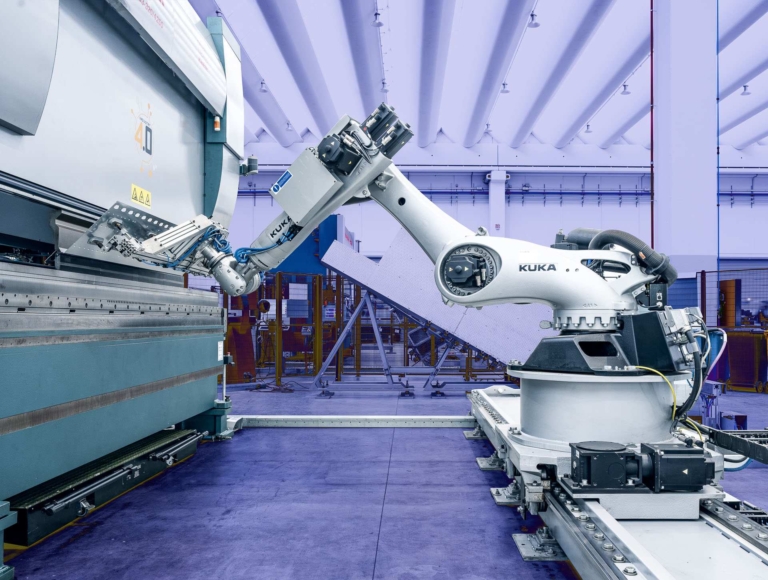
To produce uprights and ladders, two automated bending systems are used, both integrated with anthropomorphic loading and unloading robots. These systems independently handle the processing of vertical columns (uprights) and ladders side panels, previously laser-cut.

The anthropomorphic robot also coordinates VLM feeding during loading and unloading phases, optimizing material flow and reducing downtime.

Taglio Laser

Uprights

Uprights are the main load-bearing elements of the Modula structure and are entirely produced in-house, ensuring full quality control and process traceability.

Production begins with the fiber laser cutting system, equipped with automatic unloading and located in front of the bending area. Here, uprights are produced, then bent and prepared for assembly.

Montanti- Isola di saldatura

Ladders

Ladders are produced in two robotic welding cells where internally cut and bent components are assembled using MIG welding.

After welding, the ladders are sent for external painting and returned already kitted by order, ready for installation.

All structural components of the ladders are produced internally, ensuring uniformity and dimensional precision.

Scale

Cross Members and Structures

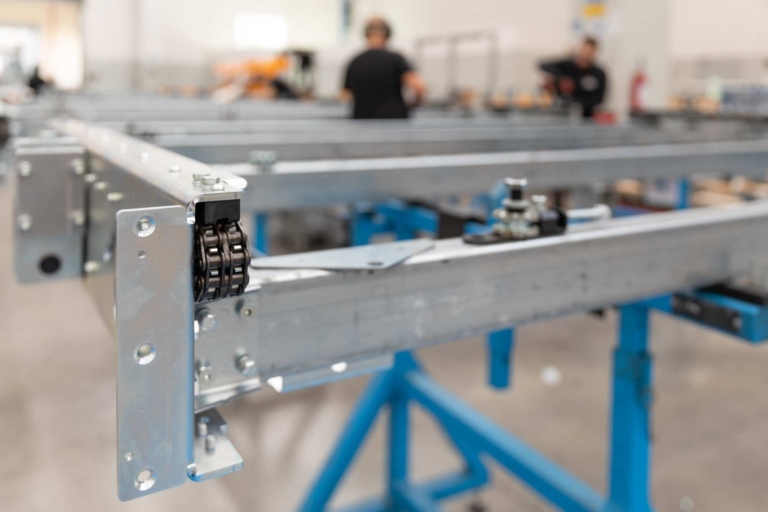
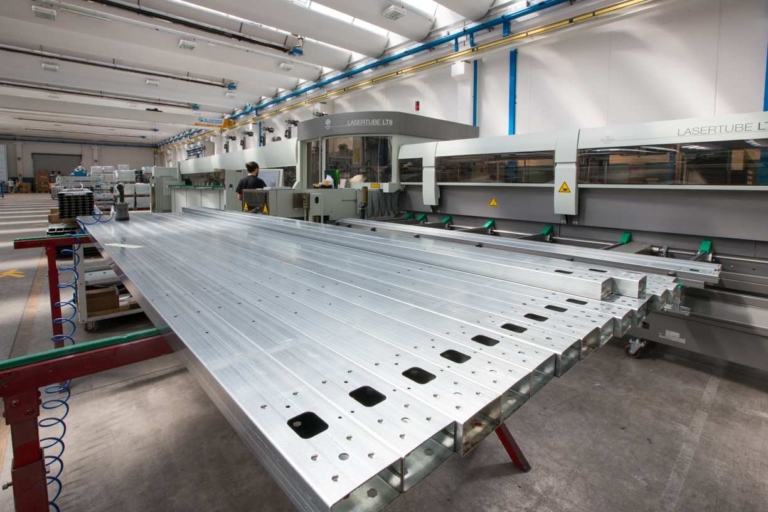
The connecting cross members of the Modula structure are produced using LT8 tube cutting systems, which process an average of 12,000 meters of tubular steel per week. The cut pieces are unloaded by automatic robots that stack and prepare them for subsequent insertion or assembly phases.

LT8

4. Automatic Kitting of All VLM's Components

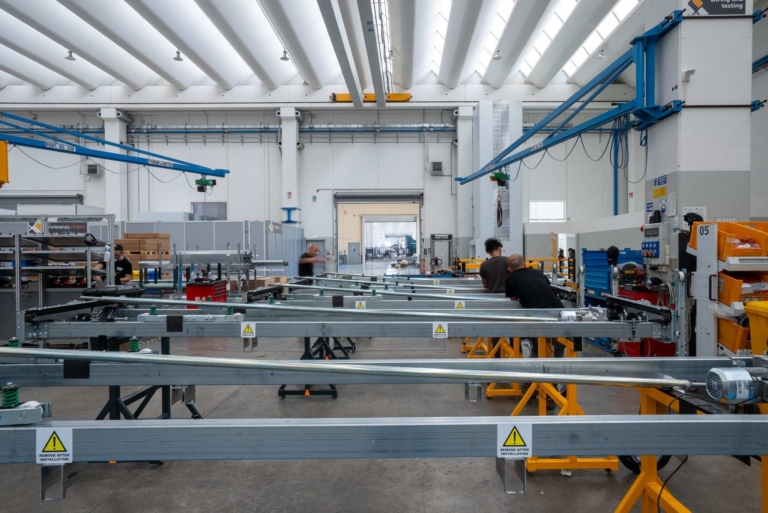
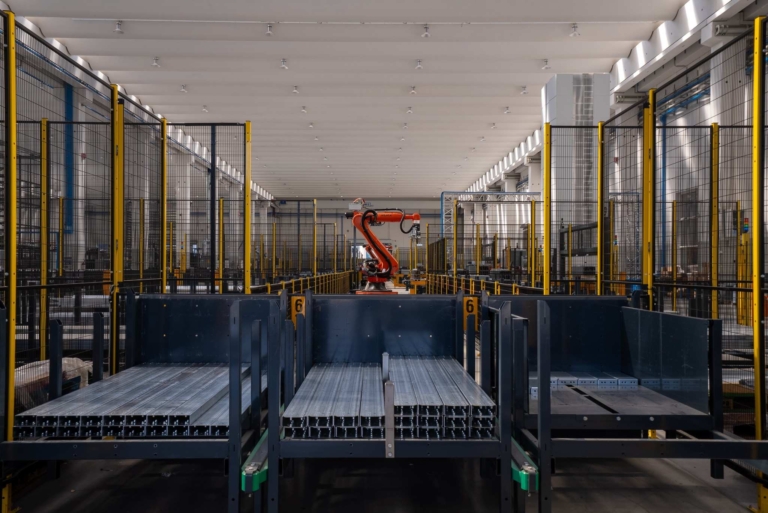
At the end of the production cycle, an automatic kitting system manages the composition of the packages ready for assembly. Two rail-mounted robots pick uprights, cross members, and braces from the VLMs, autonomously assembling the mounting kits. This system has replaced previous manual operations, increasing speed, precision, and operational safety.

Kitting

5. Production of the Slim Range

At the Salvaterra facility, there is a dedicated line for producing the Slim range, equipped with a sixth punching and paneling line dedicated to manufacturing stocked components used in assembly and paneling stages.

This department ensures constant component availability and reduced lead times for Slim models.

Gamma Slim