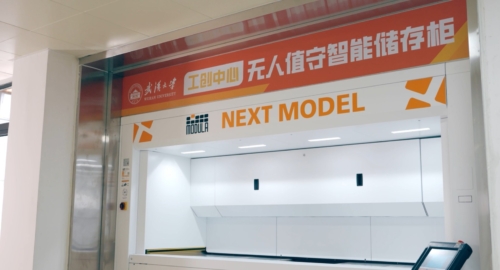
As services become increasingly digitalized and resource management grows more complex, sectors such as education, training, library services, and public administration are also facing new and increasingly sophisticated logistical challenges. Environments traditionally focused on document management or the storage of physical materials are evolving toward more dynamic operating models, where speed of access, traceability, and space optimization are becoming strategic factors.
Inefficient use of space is a major constraint, as is limited visibility over inventory and the difficulty of ensuring security and access control, especially in shared, high-traffic environments.
The Modula Vertical Lift Module offers a practical and scalable answer to these needs. By making use of vertical space, it can recover up to 90% of floor space compared to traditional solutions, freeing up valuable areas for higher-value activities. Today, the automation of storage and retrieval processes drastically reduces errors, eliminates manual handling, and speeds up access to materials.
One of its distinctive features is complete traceability: every item, document, or piece of equipment can be monitored in real time. This makes it possible to know at all times where a resource is located, who used it, and when. At the same time, controlled access systems enhance security — a crucial aspect when dealing with sensitive documents in laboratories, offices, and departments.
Integration with advanced warehouse management software (WMS) and digital applications makes it possible to automate and simplify the entire operational flow, from material booking and access management to data analysis. The result is an intelligent ecosystem, capable of adapting to the specific needs of each organization and supporting its digital transformation journey.
For schools and universities, this means more efficient management of teaching equipment and a smoother experience for students and faculty. For libraries and archives, it translates into optimal preservation and faster access to materials. For public administration, it means greater control over documents, reduced processing times, and improved cost efficiency.