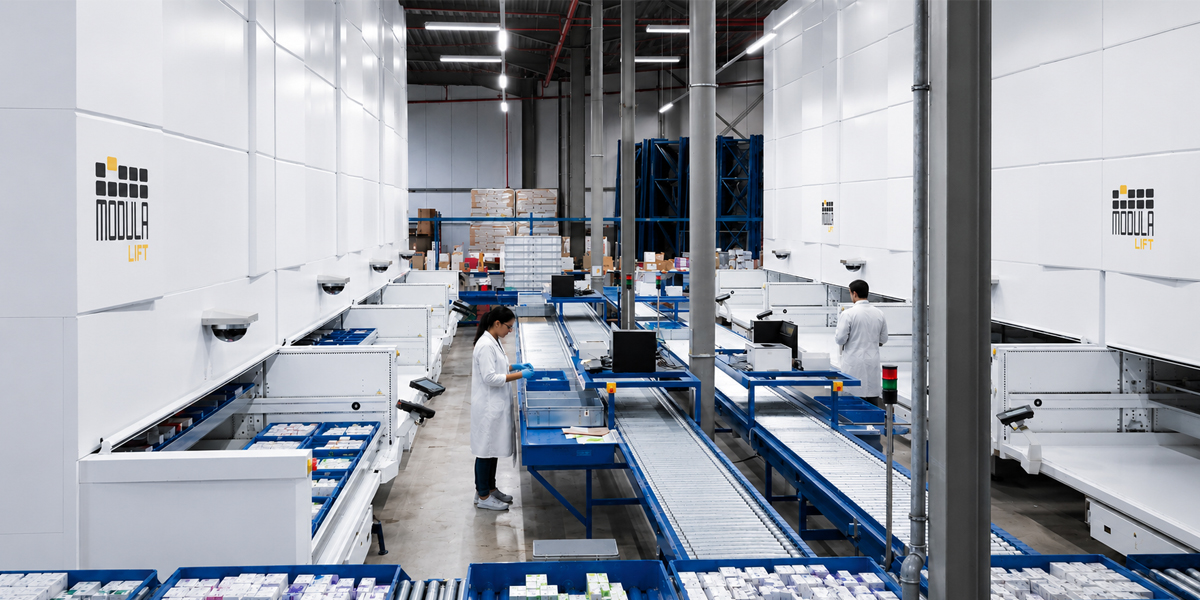
Pharmaceutical logistics includes all the activities that ensure medicines, medical devices, and healthcare products reach patients safely, traceably, and on time, from the manufacturer to the point of care. It is not just about transportation: it also includes storage, preservation, inventory management, environmental condition monitoring, batch traceability, and distribution continuity.
For this reason, pharmaceutical logistics can no longer be considered a simple operational function. It is a strategic component of a country’s healthcare, industrial, and manufacturing system.
What Is Pharmaceutical Logistics?
Pharmaceutical logistics includes all the activities required to handle, store, and distribute pharmaceutical and healthcare products in compliance with strict quality, regulatory, and safety requirements.
This supply chain includes, among others:
- medicines for human and veterinary use;
- medical devices;
- diagnostic products;
- cosmetics and food supplements;
- sterile materials;
- temperature-sensitive products;
- items intended for pharmacies, hospitals, wholesalers, distributors, and healthcare e-commerce businesses.
Unlike other supply chains, the pharmaceutical supply chain has one essential characteristic: logistics efficiency directly affects the availability of care. A delay, a picking error, a cold chain break, or incomplete traceability can have consequences that are not only economic, but also healthcare-related.
Why Pharmaceutical Logistics Has Become Strategic
The pharmaceutical supply chain has come under increasing pressure, particularly due to greater regulatory complexity and growing demand for healthcare products.
In this scenario, pharmaceutical logistics has become critical infrastructure for at least five reasons.
-
It Ensures Continuity of Care
The availability of medicines depends on the supply chain’s ability to deliver the right product, to the right place, at the right time, and under the right conditions.
Hospitals, pharmacies, healthcare facilities, and end patients rely on a logistics network that must operate without interruption. When this network slows down or stops, the risk does not only affect distribution: it directly affects patient health.
-
It Protects Product Quality, Safety, and Integrity
Many pharmaceutical products require specific storage conditions. Some must be stored at controlled temperatures, while others must be protected from humidity, contamination, or tampering.
Pharmaceutical logistics must therefore ensure documented processes, suitable environments, constant monitoring, and strict management of batches, expiry dates, returns, and non-conformities.
-
It Strengthens Healthcare System Resilience
A resilient supply chain is one that can respond to demand peaks, health emergencies, transport disruptions, or the temporary unavailability of specific products.
The pandemic showed how decisive healthcare logistics is for the stability of healthcare systems. But resilience is not built only during emergencies: it requires structural investments in technology, digitalization, automation, expertise, and planning capabilities.
-
It Supports Reshoring and Strategic Autonomy
Pharmaceutical reshoring, meaning the return or strengthening of critical production and activities within a country, is closely linked to logistics.
It is not enough to manufacture closer to the market if the infrastructure needed to store, manage, and distribute products efficiently is missing. A solid pharmaceutical logistics system is therefore an enabling condition for a country’s strategic autonomy.
-
It Contributes to Industrial Competitiveness
A modern pharmaceutical supply chain enables companies to reduce errors, improve inventory management, optimize space, increase traceability, and make internal flows more efficient.
This translates into greater competitiveness for manufacturers, distributors, logistics operators, hospital pharmacies, wholesalers, and healthcare e-commerce businesses.
The Main Challenges of Pharmaceutical Logistics
Pharmaceutical logistics is a highly regulated supply chain in which the management of medicines, medical devices, and healthcare products requires precision, traceability, and full regulatory compliance.
The most relevant challenges include:
Full Traceability
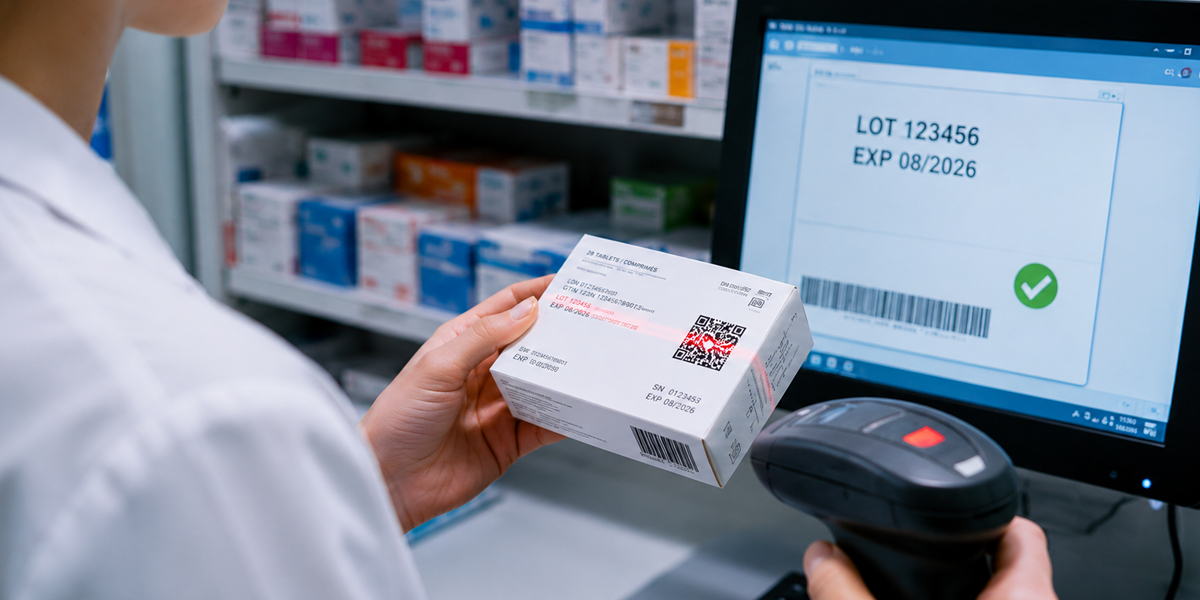
Every product must be identifiable throughout the logistics chain. Batch number, expiry date, location, movements, operators involved, and storage conditions must be managed with precision.
Effective traceability reduces the risk of errors, simplifies any product recalls, and improves control over the entire process.
Cold Chain Management
The cold chain is one of the most delicate aspects of pharmaceutical logistics. For temperature-sensitive products, temperature must remain within defined ranges during storage, handling, and transport.
Even small deviations can compromise product quality. This is why monitoring systems, validated processes, and storage solutions aligned with product requirements are essential.
Reducing Picking Errors
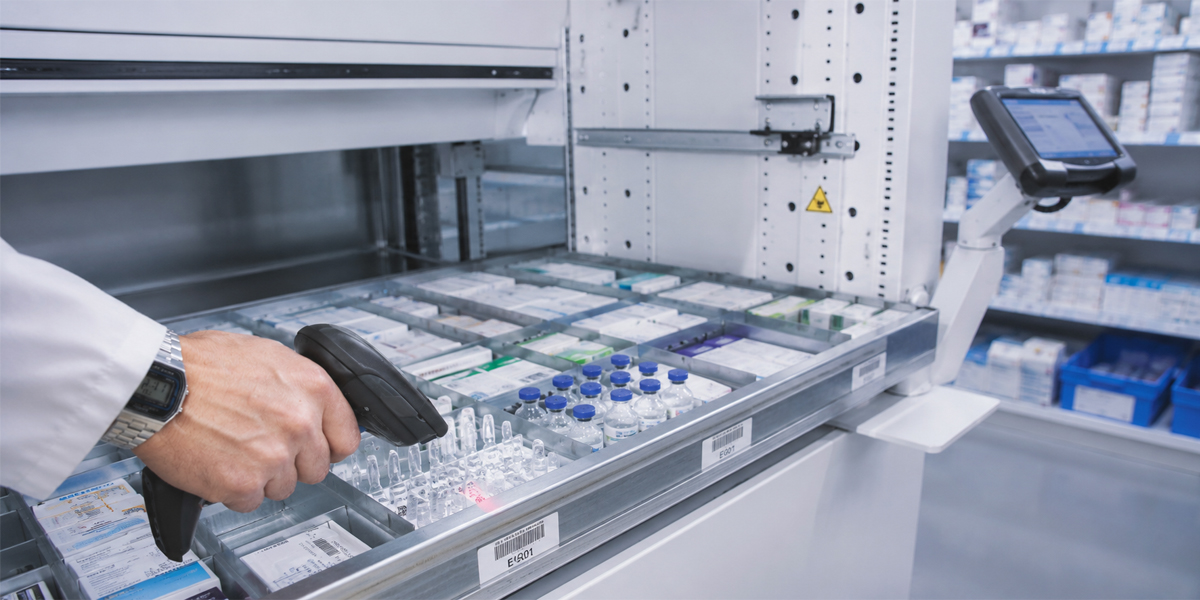
In the pharmaceutical sector, a picking error is not just an operational issue. It can generate returns, delays, additional costs, and safety risks.
The combination of warehouse management software, automatic identification, FIFO/FEFO logic, and picking support systems makes it possible to increase accuracy and reliability.
Space Optimization
Medicines, medical devices, and healthcare products can have very different formats, volumes, and storage conditions. In traditional warehouses, this variety can lead to dispersion, inefficiencies, and difficulty accessing items.
Optimizing space means increasing storage capacity, improving SKU organization, and making daily operations smoother.
Cost Pressure and Sustainability
Energy, transport, personnel, compliance, and infrastructure have a significant impact on pharmaceutical logistics costs. At the same time, attention is growing toward more sustainable, digital solutions capable of reducing waste, consumption, and unnecessary movements.
More efficient pharmaceutical logistics translates directly into lower operating costs and better waste control across the entire supply chain.
Digitalization and Automation: The New Standard in Healthcare Logistics
The transformation of pharmaceutical logistics increasingly depends on the ability to integrate physical processes and data.
Digitalization and automation make it possible to:
- monitor inventory in real time;
- reduce product access times;
- limit manual errors;
- improve operational traceability;
- manage batches and expiry dates more accurately;
- control access;
- optimize warehouse space;
- increase safety and ergonomics for operators.
The healthcare logistics of the future will be increasingly data-driven: not just more efficient warehouses, but systems capable of generating useful information to support fast, documented, and verifiable decision-making.
From Institutional Recognition to Supply Chain Investment
The growing recognition of pharmaceutical logistics as an essential and strategic activity confirms a clear trend: the distribution of healthcare products is an integral part of healthcare and industrial security.
This change in perspective can encourage greater focus on investments in infrastructure, innovation, digital technologies, and green solutions.
For companies in the sector, it means rethinking logistics not as a cost center, but as a driver of reliability, compliance, productivity, and service continuity.
The Role of the Warehouse in Pharmaceutical Logistics
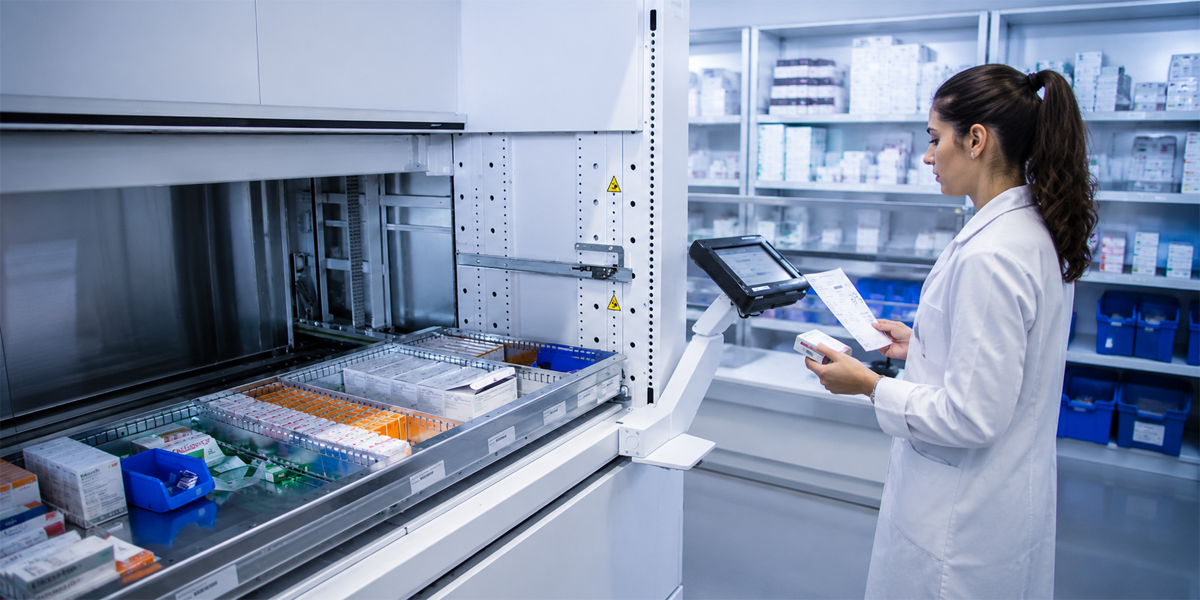
Within the pharmaceutical supply chain, the warehouse is a decisive hub. It is where many of the most critical activities are concentrated: goods receiving, inspection, location assignment, storage, order preparation, inventory, batch management, expiry date management, and shipping.
An efficient pharmaceutical warehouse must ensure:
- orderly item organization and identification;
- fast product availability;
- reduction of unnecessary handling;
- access security;
- monitoring of environmental conditions;
- integration with management software;
- operational traceability;
- flexibility in response to changes in demand.
This is why automation can become an important ally, especially in environments where space, precision, and speed are competitive factors.
How Modula Supports Pharmaceutical Logistics
Modula develops warehouse automation solutions designed to make storage and picking more efficient, controlled, and traceable.
In the pharmaceutical and healthcare sector, Modula solutions can support companies, distributors, hospital pharmacies, drugstores, and e-commerce businesses in managing products with different requirements: fast-moving items, small parts, devices, products sensitive to temperature or humidity, sterile materials, and SKUs with high traceability requirements.
Modula automated vertical and horizontal storage systems help to:
- recover floor space;
- speed up picking operations;
- reduce picking errors;
- improve inventory management;
- trace operations;
- increase safety and ergonomics;
- integrate the warehouse with software and management systems;
- support environments with specific storage requirements.
In a supply chain where continuity, safety, and precision are essential, warehouse automation is a concrete building block for making pharmaceutical logistics more resilient and competitive.
In this scenario, Modula has already been chosen by numerous companies in the pharmaceutical and healthcare sector, including GlaxoSmithKline, Johnson & Johnson, Roche, Chiesi, Amneal Pharmaceuticals, and Gland Pharma. This is a tangible sign of how Modula Vertical Lift Modules can meet the needs of pharmaceutical logistics that is increasingly focused on efficiency, traceability, product safety, and operational continuity.
For applications with more specific storage requirements, Modula also offers dedicated solutions such as Clean Room and Climate Control. Clean Room is designed for storage in controlled-contamination environments, helping to limit the presence of airborne particles and prevent contamination of stored materials, in compliance with ISO 14644 standards. Climate Control, on the other hand, makes it possible to manage products sensitive to temperature and humidity through an insulated VLM equipped with refrigeration systems and internal condition monitoring.
To learn more about these solutions and their role in pharmaceutical logistics, discover how Modula Vertical Lift Modules work for the pharmaceutical sector.
Conclusion
Pharmaceutical logistics is much more than a transport and storage activity. It is a strategic infrastructure that connects industry, healthcare, pharmacies, hospitals, and patients.
Recognizing its value means investing in continuity of care, product safety, healthcare system resilience, and national competitiveness.
In this scenario, digital technologies, automation, and smart warehouses become essential tools for tackling the challenges of the healthcare supply chain and building pharmaceutical logistics that is more efficient, safer, and ready for the future.
Modula VLM becomes a fundamental building block: it addresses some of the most critical needs of pharmaceutical logistics — space optimization, reduction of picking errors, and operational traceability — while improving efficiency, safety, and compliance to ensure operational continuity across the entire supply chain.
FAQ
What Is Pharmaceutical Logistics?
Pharmaceutical logistics includes the storage, preservation, transport, traceability, and distribution of medicines, medical devices, and healthcare products. Its goal is to ensure that products reach their destination safely, on time, and in compliance with quality requirements.
Why Is Pharmaceutical Logistics Strategic?
Pharmaceutical logistics plays a strategic role because it ensures the availability of healthcare products and contributes to continuity of care. An efficient logistics supply chain reduces the risk of disruption, improves healthcare system resilience, and supports industrial competitiveness.
What Are the Main Challenges of Pharmaceutical Logistics?
The main challenges of pharmaceutical logistics involve traceability, cold chain management, inventory control, reduction of picking errors, regulatory compliance, space optimization, and control of operating costs.
What Is the Role of the Warehouse in Pharmaceutical Logistics?
The warehouse is a central hub in the pharmaceutical supply chain. It enables the management of receiving, storage, preservation, picking, inventory, batches, expiry dates, and shipments. An efficient warehouse improves product safety, traceability, and availability.
How Can Automation Improve Pharmaceutical Logistics?
Automation makes it possible to optimize space, speed up picking, reduce errors, monitor inventory, and trace operations. In pharmaceutical environments, these benefits help make the supply chain more reliable, safer, and more resilient.
Automation: the way forward to manage e-commerce logistics