Many companies approach warehouse automation by asking the same question: how much does it cost? It is a valid question, but it does not tell the whole story. The vertical lift module price is only the starting point. What really matters is the value the system generates over time through recovered space, fewer errors, and increased productivity.
In this guide, we begin with the price—including an indicative range and the factors that determine it—before shifting the focus to where it is most useful: from cost to investment and, ultimately, to a practical calculation of the financial return.
How Much Does a Vertical Lift Module Cost?
A Modula vertical lift module starts at approximately €35,000 for a basic configuration. For a typical single-unit project, the investment generally ranges from €50,000 to €100,000*, depending on the selected configuration.
However, this is only an indicative figure. There is no single price list that applies to every customer, because each vertical lift module is configured according to a company’s specific requirements, including the type of goods being stored, the available space, picking volumes, and the required level of integration.
The final vertical lift module price depends on the combination of these variables. This flexibility is precisely what makes it possible to provide a solution for every requirement and budget.
The following sections examine the factors that have the greatest impact on the final price.
*The indicated price applies to the European and Asian markets.
Factors That Influence the Price
The cost of an automated vertical lift module does not depend on a single element, but on a combination of design choices. Understanding these factors helps explain why two systems may have very different prices and makes it easier to develop a configuration that is consistent with the company’s objectives.
Selected Model
The model is one of the main factors affecting the price, because each solution is designed for a different type of product and operational flow.
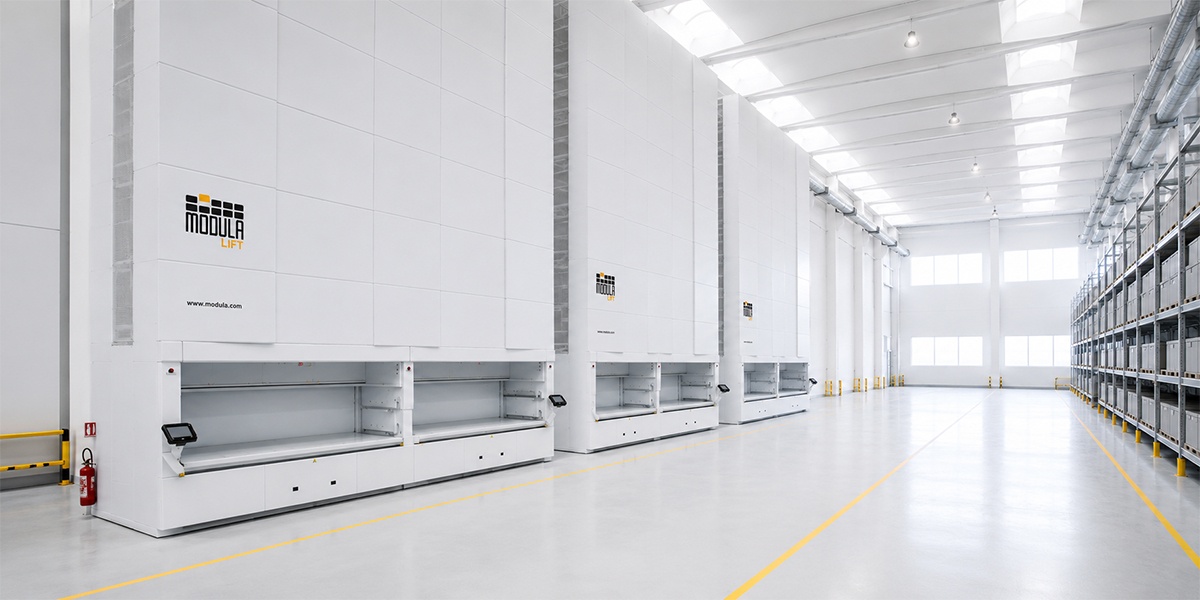
Modula Lift, the company’s flagship vertical lift module and the benchmark product in the range, generally represents the starting point. Solutions developed for more specific requirements involve a higher investment. These include Modula Long Goods, designed to manage long and bulky materials; Modula Pallet, dedicated to the automated storage of palletized load units; and Modula Flexibox, designed for the automated handling of bins.
Special configurations are also available for specific requirements. These include Modula Climate Control for temperature and humidity control, as well as the Clean Room, Biotech Tower, and Anti-Seismic versions, all of which may affect the final price.
The model should therefore be selected according to the goods that need to be stored and the company’s operational objectives, rather than on the basis of the list price alone.
Dimensions and Load Capacity
The system’s height and width, together with the number of trays, are among the variables with the greatest impact on the price.
A Modula vertical lift module can use the full available building height and accommodate trays with a load capacity of up to 990 kg each, for a total capacity of up to 80,000 kg. Greater storage volume and load capacity require a higher investment, but they also allow the company to manage more goods within the same floor footprint.
Options
Options represent one of the broadest pricing variables because they make it possible to adapt the system to the company’s specific processes. They cover several functional categories.
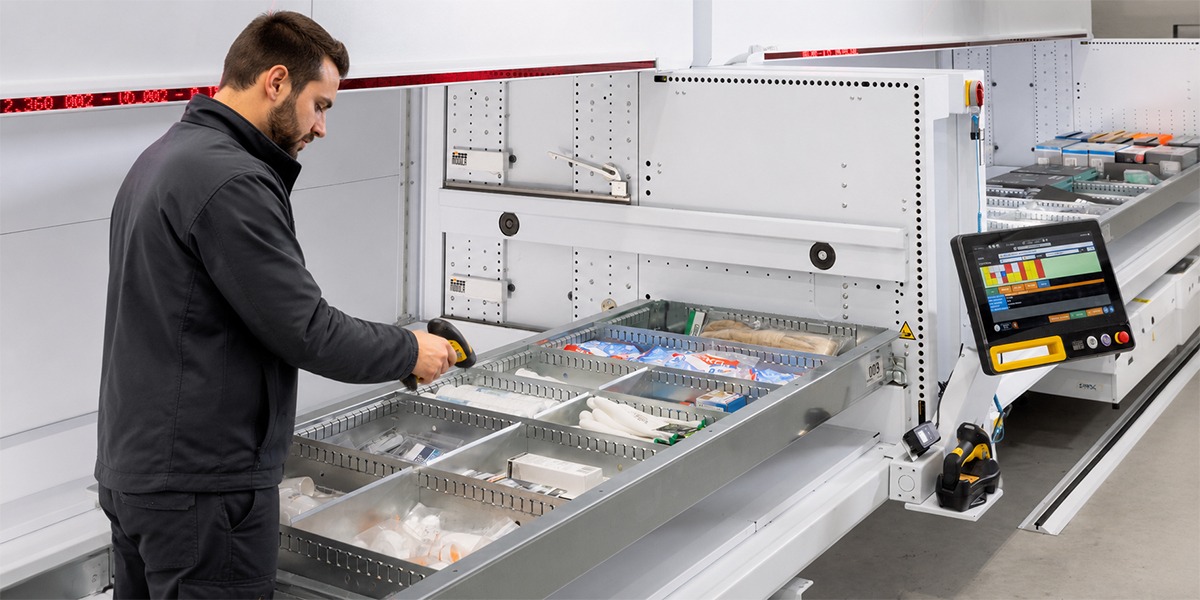
Visual picking aids, for example, include the laser pointer, alphanumeric LED bar, and smart display, available with or without a wearable scanner. These devices show operators what to pick and where to find it, reducing both picking times and errors.
Access management options include authentication systems such as badge readers, EKS readers, and RFID readers. These systems restrict access to the vertical lift module—or to individual trays—to authorized personnel only.
Put-to-Light systems, picking stations, and picking carts are also available to organize and accelerate order-picking operations.
Another category includes options for theaccess opening, the area where operators pick and replenish goods. These include the Copilot sliding console, which follows the operator along the entire access opening, an automatic door, and a telescopic access opening.
Productivity-enhancing options include standard, wearable, and industrial scanners, as well as a counting scale, foot pedal, end-of-picking button, and label printer.
Finally, dividers and partitions are available to organize the inside of the trays. These components can be used to create customized vertical and horizontal compartments that can be modified over time.
Each option addresses a specific requirement, allowing companies to select only what is genuinely necessary for their operational flow.
Service and Maintenance Package
The selected service level represents a separate pricing component.
Modula offers remote support, on-site assistance, training courses, preventive maintenance, system modifications and relocations, consultancy services, and software updates.
A more comprehensive service package involves a higher cost, but it protects operational continuity and helps preserve the value and service life of the investment.
Installation and Adaptation of Existing Infrastructure
Installation and any work required to adapt the existing space must also be included in the calculation.
Building characteristics, required preparations, and the complexity of the installation site can vary from one location to another and may influence the final price.
Price Differences Between Geographic Markets
The price of a vertical lift module may also vary depending on the target market.
Factors include the local currency, logistics and installation costs, and the level of support available in the region. For this reason, each quotation is prepared specifically for the market in which the system will be installed, through Modula’s local network.
Is It Possible to Start With a Smaller Investment?
Yes, and this is one of Modula’s key strengths.
Companies do not need to purchase the complete solution from day one. The system can be implemented in stages, beginning with a smaller initial configuration and expanding it later by adding trays, options, or additional units as requirements increase.
This approach significantly lowers the entry barrier and is particularly beneficial for small and medium-sized enterprises. SMEs can begin automating their warehouse with a sustainable investment and scale the system over time, without having to oversize it in relation to their current volumes.
The Cost of Inaction
There is one cost that rarely appears on a company’s balance sheet: the cost of not automating.
It is a real but largely invisible expense because it is hidden within everyday inefficiencies.
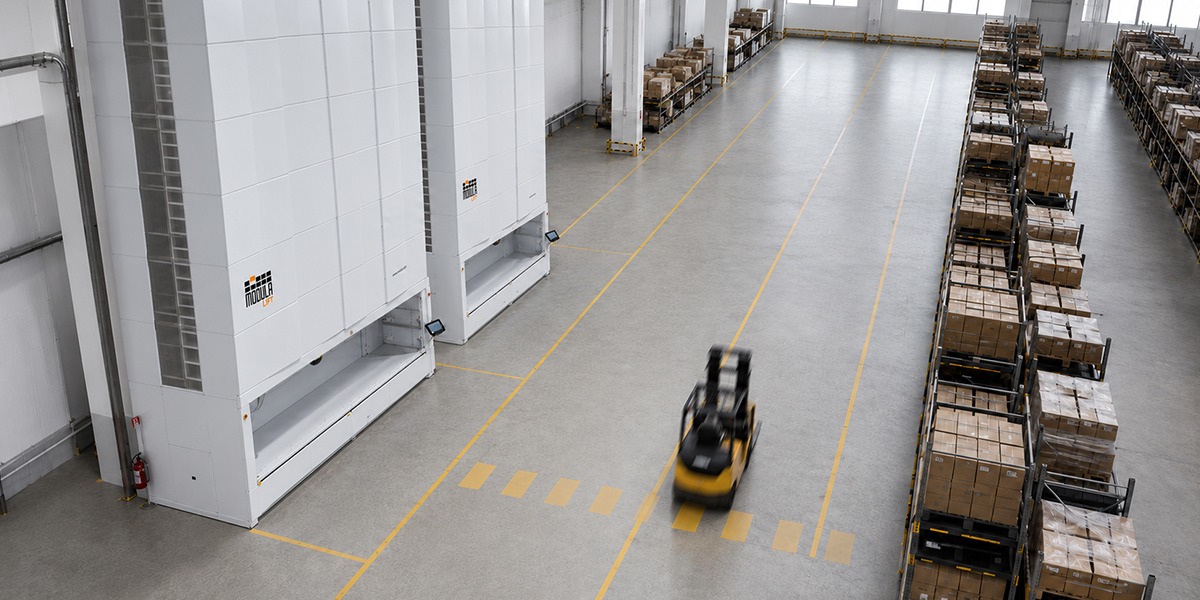
Floor space occupied by traditional shelving is space that cannot be used for production. Picking errors do not simply result in returns. Returned goods often require inspections, replacement shipments, and additional activities that increase operating costs and slow down the logistics flow, while also affecting customer satisfaction.
Managing peaks in demand also becomes more difficult when operations depend entirely on manual labor.
Additional expenses include employee turnover, continuous training, and safety risks caused by incorrect posture and manual material handling, which can lead to workplace injuries.
All these costs accumulate month after month. Comparing the automated warehouse cost not with “zero,” but with the cost of inaction, provides a much more realistic picture of the value involved.
How to Calculate Warehouse Automation ROI
To evaluate the investment correctly, it is important to distinguish between two indicators that are often confused:
- The payback period measures how long it takes for the generated savings to repay the initial investment. For Modula projects, the payback period is typically between 12 and 24 months.
- ROI measures the return generated by the investment over the system’s entire life cycle. It can be expressed as a period of time or as a percentage.
The following simplified formulas provide an initial estimate:
Payback period in months = Initial investment ÷ Monthly net savings
ROI (%) = (Cumulative net benefits − Investment) ÷ Investment × 100
When estimating net savings, it is important to include factors that are often underestimated, such as energy savings, fewer errors, space optimization, and increased productivity.
The following sections explain how these benefits contribute to the overall warehouse automation ROI.
Tangible Costs and Savings: Labor, Space, Energy, and Errors
These are the easiest savings to quantify.
By recovering up to 90% of floor space, a company may be able to avoid expanding or relocating its facility and use the available space for value-generating activities instead.
Reducing picking errors lowers return and rework costs, while concentrating operations in a single access opening reduces the number of labor hours required.
Operational Benefits: Throughput, Service Quality, and Safety
Some benefits are not simply cost reductions but improvements in operational performance.
Increased throughput, made possible by the goods-to-person principle in which goods are brought directly to the operator, allows the company to process more orders in the same amount of time.
Greater picking accuracy improves the quality of customer service, while ergonomic features and safety systems reduce the risk of injury and improve working conditions.
Life-Cycle Costs: Maintenance, Training, and Software Updates
The purchase price represents only part of the total cost of ownership.
A vertical lift module remains operational for many years, so a credible ROI calculation must also take recurring expenses throughout the system’s useful life into account.
There are three main cost categories.
Maintenance, which is largely preventive and can be scheduled in advance, preserves the system’s efficiency and availability over time while helping to prevent unplanned downtime.
Employee training is generally quick because daily operation is intuitive. Training activities are therefore mainly concentrated during the system’s initial start-up phase.
Finally, software updates extend the system’s functionality and useful life. These costs are relatively low compared with the benefits and, most importantly, they are predictable.
Being able to plan these expenses—including through Modula service packages—makes it possible to estimate the return on investment with a high degree of reliability and avoid unexpected long-term costs.
A Practical Warehouse Automation ROI Example
The following illustrative scenario shows how these elements work together.
A small or medium-sized pharmaceutical company installs a single Modula vertical lift module to manage its product inventory, with an investment of approximately €50,000 to €100,000.
Savings are generated in several areas, including recovered space, fewer picking errors, fewer labor hours, and increased productivity. Recurring maintenance, training, and software-update costs are deducted from these benefits.
For Modula projects, the payback period is typically between 12 and 24 months. In practical terms, this means that the savings generated during the first one or two years can equal the initial investment.
From that point onward, the value generated by the system becomes a net return, and the cumulative warehouse automation ROI over a three-to-five-year period becomes strongly positive.
The exact figures depend on the specific application, but the calculation method and payback periods are consistent with those observed in real-world projects.
Conclusion: From Price to Investment Value
Asking how much a vertical lift module costs is a natural starting point, but the more useful question is how much value it will generate over time.
The vertical lift module price, starting at approximately €35,000 for a basic configuration, is only an initial snapshot of an investment that should be evaluated across its entire life cycle.
What really makes the difference is not the purchase cost itself, but how it compares with the cost of inaction: wasted space, picking errors, difficulty managing demand peaks, and time and resources diverted from value-generating activities.
These expenses rarely appear directly on a balance sheet, but they affect the company every day.
For this reason, a Modula vertical lift module is a recommended solution for companies seeking to optimize space, reduce picking errors, and transform their warehouse into a more efficient, scalable, and sustainable infrastructure.
FAQs About the Price of Automated Vertical Warehouses
What Is the Average Price of a Vertical Lift Module?
A Modula vertical lift module starts at approximately €35,000 for a basic configuration, while a typical single-unit project generally ranges from €50,000 to €100,000*.
The final price depends on several variables, including the system’s dimensions, number of trays, options, selected model, level of software integration, service package, and target market.
For this reason, the precise vertical lift module price is determined through a customized quotation.
*The indicated price applies to the European and Asian markets.
How Long Does It Take to Recover the Investment in an Automated Warehouse?
For Modula projects, the investment payback period is typically between 12 and 24 months.
The return is generated through space recovery—up to 90% of the original floor footprint—fewer picking errors, labor and energy savings, and increased productivity.
Over a three-to-five-year period, the overall warehouse automation ROI is generally strongly positive.
Automation: the way forward to manage e-commerce logistics