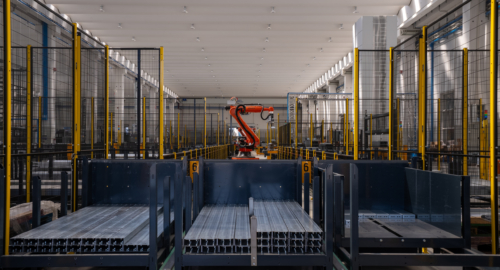
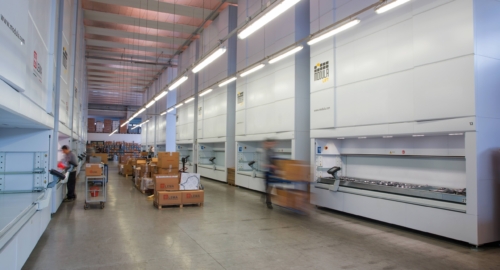
Food warehouse management encompasses the processes, organizational criteria and technologies used by companies in the food industry to receive, store, track and handle food products, ingredients and packaging materials, ensuring that every product maintains its quality and safety until shipment.
Unlike in other industries, food warehouse management goes far beyond organizing warehouse space. It requires controlled temperature and humidity, mandatory traceability throughout the supply chain, uninterrupted production and bottling lines, and full regulatory compliance. These requirements rarely coexist to the same extent in other industries, which is why food warehouse management follows a specific set of rules.
Optimizing food storage therefore means balancing three needs that are often in tension with one another: protecting perishable and sensitive products, moving them quickly and accurately, and documenting every movement.
In this article, we look at the specific characteristics of a food & beverage warehouse, the main operational challenges involved, and how automation can help overcome them.
The Specific Characteristics of a Food Warehouse
A food warehouse differs from any other industrial warehouse because of a combination of factors that influence every management decision:
- Product perishability: many products have a limited shelf life, making inventory rotation not simply an efficiency measure, but a necessity for preventing losses and waste.
- Hygiene and sanitation requirements: materials, surfaces and environmental conditions must prevent contamination and microbial growth, with stricter cleaning standards than in other industries.
- Inventory rotation (FIFO and FEFO): inventory must be rotated to prevent products approaching their expiration date from remaining in storage. Alongside FIFO (First In, First Out), FEFO (First Expired, First Out) is often the preferred approach: the first batch to leave the warehouse is not the one that arrived first, but the one with the nearest expiration date.
- Supply chain traceability: every batch must be identifiable and traceable both upstream and downstream, from receiving to shipping, so companies can respond effectively to recalls and inspections.
- Seasonal peaks: demand and production often follow pronounced seasonal patterns. Some are linked to the calendar, such as holidays, harvest seasons and promotional campaigns, while others depend on the nature of the product itself, as in the case of ice cream and other seasonal products. Volumes can therefore change significantly within just a few weeks.
- SKU variability: ingredients, semi-finished products, finished goods, packaging and ancillary materials coexist within the same flow, despite having very different physical and storage requirements.
The Main Operational Challenges
These characteristics are not merely theoretical: they translate into daily operational pressures that overlap and influence one another.
Managing perishability, hygiene requirements, inventory rotation and high SKU variability simultaneously means that a problem in one area — such as a delay in picking, inaccurate inventory data or environmental conditions outside the required parameters — can quickly affect the rest of the process, with consequences for costs, quality and compliance.
These are the critical issues at the heart of food logistics, and they give rise to the most common operational challenges within the warehouse.
Temperature and Humidity Control
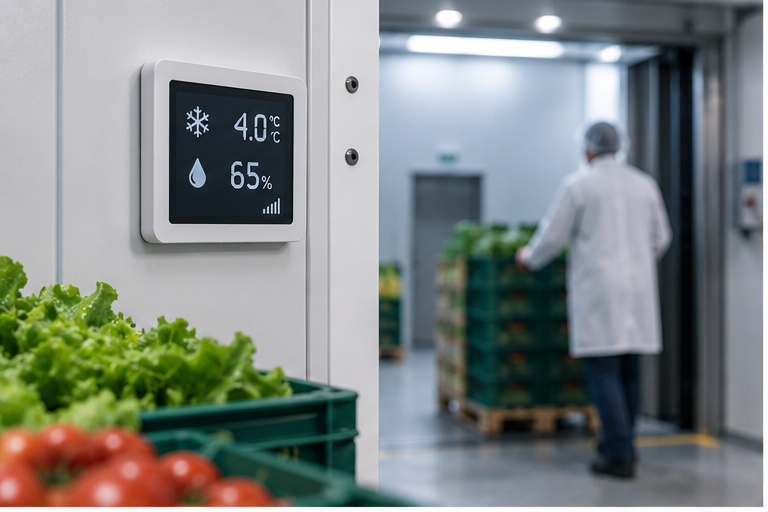
In the food industry, sensitivity to temperature and humidity does not apply only to fresh or refrigerated products.
When environmental conditions fluctuate, dry ingredients, semi-finished products, labels and packaging materials may also deteriorate, losing quality, adhesion or structural integrity.
The challenge is not simply to reach a specific temperature, but to maintain both temperature and relative humidity at stable levels over time, even while operators continuously access stored goods.
Prolonged deviation from the required conditions can compromise an entire batch and, in some cases, result in non-compliance with hygiene and sanitation procedures.
For this reason, climate conditions must be monitored continuously rather than through occasional checks.
Traceability and Expiration Date Management
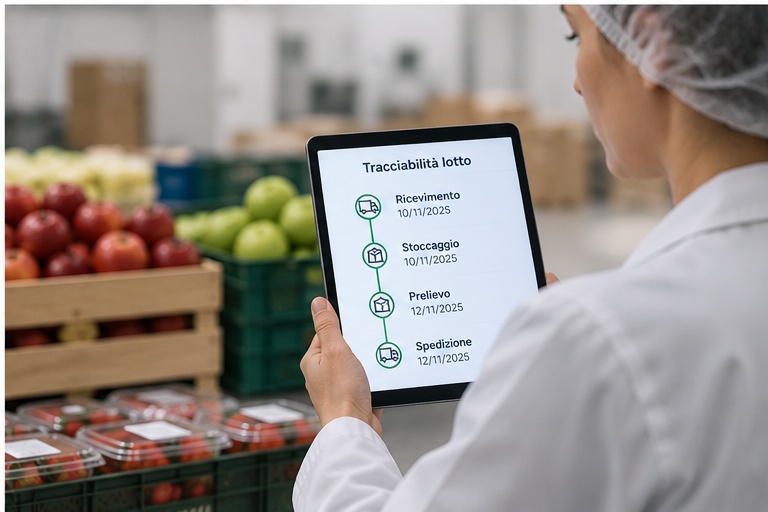
Every batch must be identifiable at all times: where it is located, how much is available and when it expires.
This information provides the basis for applying inventory rotation correctly, particularly the FEFO method, and for responding quickly to a recall by reconstructing the product’s journey both upstream and downstream.
When traceability relies on paper records and visual checks, the process becomes slow and vulnerable to human error. A missing record or incorrect storage location can result in products expiring while still in inventory or make it difficult to isolate a non-compliant batch.
In an industry where supply chain traceability is mandatory rather than optional, manual management therefore represents both an operational and a compliance risk.
Production and Bottling Line Continuity
Once food production and bottling lines are running, stopping them can be extremely costly.
Any interruption required to retrieve a spare part, a component for a format change or an ancillary material does not simply stop one workstation: it slows down the entire facility and reduces overall production flow productivity.
The time spent searching for the correct component is a hidden cost that accumulates with every operational changeover.
Ensuring that the right item is always available and immediately accessible is therefore essential for maintaining production continuity and reducing line changeover times.
Managing Ancillary Materials: Labels, Caps and Packaging
Managing ancillary materials is one of the most complex and often underestimated activities in a food warehouse, particularly in the wine, oil and vinegar industries.
Labels, caps, capsules and packaging materials can involve thousands of different item codes, often stored in small quantities for individual batches and subject to frequent variations related to seasonality, vintages and promotional campaigns.
Retrieving the correct packaging material requires absolute precision. Using the wrong label, for example, can compromise an entire batch of finished products, with both financial and compliance consequences.
These materials must also be protected against loss, damage and, in some cases, theft.
Reducing Waste and Picking Errors
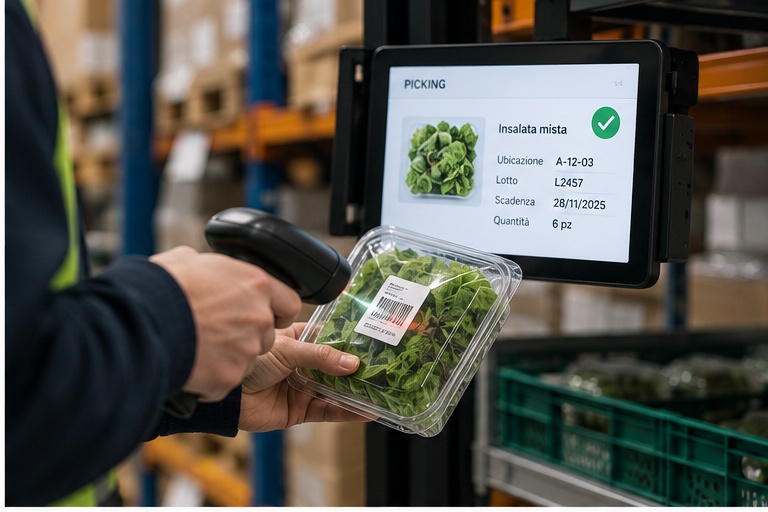
In a food warehouse, a picking error is never simply a case of shipping the wrong order.
It can result in returns, rework and delays, but in the case of perishable products it can also lead directly to waste. Goods picked incorrectly and then returned to storage may have lost value or may already be approaching their expiration date.
The same principle applies to space optimization. A disorganized or underutilized warehouse increases search times, multiplies errors and raises the cost per stored unit.
Reducing errors and waste is therefore not only a matter of operational efficiency: it has a direct impact on profitability and the sustainability of operations.
Temperature-Controlled Food Storage: When It Is Needed and How to Manage It
Not everything passing through a food warehouse requires a controlled environment.
Climate control is necessary when the product or material being stored is sensitive to temperature and humidity and must be protected against deterioration. This applies, for example, to certain ingredients, semi-finished products or materials that require stable environmental conditions in order to maintain their integrity and quality.
Identifying which products require these conditions is the first step. The second is adopting a food storage system capable of maintaining and monitoring the required conditions automatically, without relying on discretionary manual checks.
This is where a solution such as Modula Climate Control comes into play: a temperature-controlled storage system designed to protect materials that are sensitive to changes in temperature and humidity.
It is based on the structure of the Modula Lift VLM, enhanced with thermal insulation and a cooling system that controls its internal environmental conditions.
Its main technical features include:
- A temperature range between 2°C and 40°C and relative humidity control of ≥ 5%, with the required temperature/humidity combination configured according to the storage conditions and installation environment.
- Thermal insulation made from polyurethane foam panels, covering the vertical storage system on every side to create an insulated structure.
- A thermally broken enclosure with independent windows opening outwards, allowing operators to reach every part of the picking bay without compromising the internal temperature.
- A system based on an AHU (Air Handling Unit) that regulates temperature using chilled water from an external chiller, usually supplied by the customer. Air is circulated and cooled between the trays through dedicated ducting.
- Internal temperature and humidity sensors that continuously monitor environmental conditions both inside the storage system and in the picking bay area.
- A dehumidification unit, positioned outside the insulated structure, which further reduces relative humidity inside the storage system for applications that require it.
Maintaining a stable temperature/humidity combination therefore protects ingredients, semi-finished products and sensitive materials throughout their time in storage, integrating preservation requirements into normal storage and retrieval operations.
How Modula Lift Meets the Needs of a Food Warehouse
In the food & beverage industry, the Modula Vertical Lift Module has long supported companies with complex logistics operations.
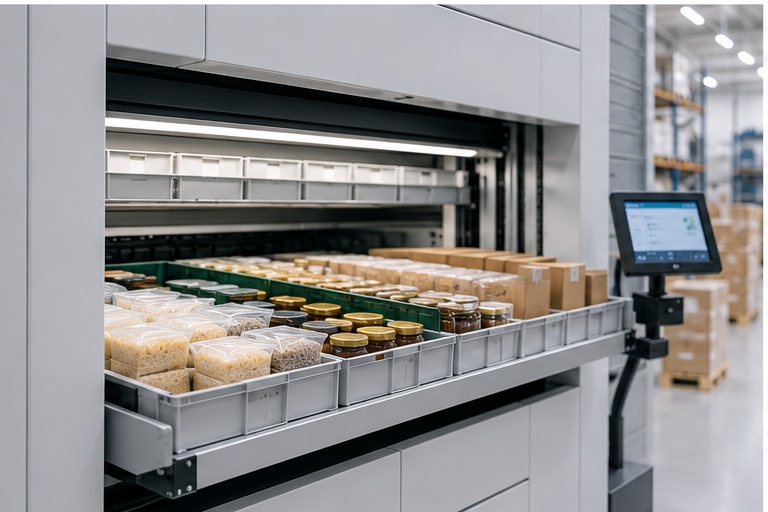
It is a vertical tower based on the goods-to-person principle, storing items in trays that protect their integrity while promoting cleanliness and organization and tracking every movement.
This model has been adopted throughout the supply chain: from major beverage and food groups such as Coca-Cola, PepsiCo, Nestlé, Danone, Yoplait, Ferrero, Unilever and Bacardi, to large retailers such as Leclerc, Conad and Kroger, as well as bakeries and smaller local businesses.
Applications range from wineries and distribution centers to packaging and bottling lines, with numerous documented use cases for Modula VLMs within the food & beverage warehouse environment.
Modula Lift for High Volumes and Heavy Components
Modula Lift is designed to store high volumes or heavy parts while maintaining the ergonomic advantages of the goods-to-person principle.
It can feature an internal or external picking bay, with either a single or double delivery level, and can reach a total load capacity of up to 90,000 kg, with approximately one metric ton per tray.
In the food industry, this capacity translates into two recurring applications: supplying production and bottling lines with spare parts and components that must always be readily available, and storing large, heavy components used during format changeovers.
Vonpar Refrescos, a Coca-Cola bottler in South America, uses Modula systems to store large components used for format changeovers, taking advantage of trays more than four meters wide.
At its Parma facility, Barilla selected external-bay storage systems to store large pasta-cutting dies. These components weigh more than 200 kg and require safe automated handling, as managing them manually would be difficult and could pose risks to operators.
Sidel, meanwhile, implemented two Modula systems to support packaging machinery and filling lines, storing both machine spare parts and components intended for end customers.
In every case, the objective is the same: reducing the time required to search for and transport parts, optimizing available space and minimizing physical strain on operators.
Real-Time Traceability and Inventory Control
In addition to physical storage, the Modula automated storage system also manages information in real time.
Every stored item is tracked and can be delivered to the picking bay in just a few clicks, while inventory remains continuously aligned with actual stock levels.
This is how the system enables FIFO and FEFO inventory rotation and batch traceability in practical terms — two essential requirements of food warehouse management.
The storage system can operate independently as a stand-alone solution or integrate with the company’s ERP system, extending information continuity from the warehouse across the entire management process.
When managing ancillary materials, for example, the system can automatically retrieve the label associated with a specific batch.
In the sparkling wine industry, Modula systems installed at Contri Spumanti, a major company in the Italian and international wine market, can hold between 200,000 and 600,000 labels per tray, with fully computerized item retrieval and an optional “advanced security” feature protecting materials against theft and damage.
For inventory control, URC Vietnam, a food & beverage manufacturer, uses Modula to manage 70% of the SKUs related to spare parts, avoiding the need to expand its storage area while maintaining strict inventory control.
The most immediate benefits can be seen in order preparation.
MT Food, a company specializing in food processing technologies and equipment, handles an average of 60–80 storage and retrieval transactions per day and, during peak periods, up to 150 picking operations per day, completed in just 2–2.5 hours thanks to the speed and accuracy of the system.
Taiwanese food company JIN DING, meanwhile, eliminated picking errors in order preparation while increasing processing speed.
In large-scale retail, Conad Nord Ovest has adopted 15 Modula VLMs over the years. The company stores more than 35% of its product range in just 5% of its warehouse floor space, handling more than 4,000 packages per day for over 50 stores.
The Benefits of Automation in Food Warehouse Management
Taken together, these solutions address the critical issues outlined earlier.
An automated warehouse enables faster picking and line changeovers, requires less floor space thanks to vertical storage, and provides greater reliability because every movement is tracked and can be reconstructed.
Within food logistics, these advantages also translate into less waste. Expiration-date-driven inventory rotation and continuously updated inventory levels reduce the amount of stock that expires while still in storage, with a direct impact on both costs and sustainability.
Increasingly, automation also goes beyond the individual storage system.
It can be integrated with visual aids and picking support systems, creating an environment in which automation is no longer limited to a single solution, but instead involves multiple automated technologies working together to ensure continuity and efficiency across the food & beverage warehouse.
In practical terms, this is the role that a Vertical Lift Module such as Modula can play in the food industry: not simply providing storage space, but creating a system that combines preservation, traceability and operational continuity, transforming the warehouse from a constraint into a driver of efficiency.
FAQs About Automated Warehouses for the Food Industry
What Is Food Warehouse Management?
Food warehouse management encompasses the processes and technologies used to receive, store, track and handle food products, ingredients and packaging materials while maintaining their quality and safety until shipment.
Compared with other industries, it requires a specific approach because it must simultaneously address product perishability, hygiene and sanitation requirements, FEFO-based expiration date management, supply chain traceability and the continuity of production lines.
How Is Temperature Managed in an Automated Food Warehouse?
In an automated food warehouse, temperature can be managed using an insulated structure and a dedicated cooling system.
With Modula Climate Control, polyurethane foam panels insulate the storage system on every side, while an AHU supplied by an external chiller regulates temperature by circulating cooled air between the trays.
Internal temperature and humidity sensors continuously monitor environmental conditions, with an operating temperature range between 2°C and 40°C and relative humidity control of ≥ 5%.
How Can Product Traceability Be Ensured in a Food Warehouse?
Traceability in a food warehouse can be ensured through an automated storage system capable of recording every movement in real time, including the receipt, location, picking and quantity of each batch.
With Modula, items are tracked and can be retrieved at the picking bay in just a few clicks, inventory is continuously updated, and FEFO rules can be applied according to expiration dates.
Integration with the company’s ERP system extends traceability from the warehouse to the entire management process, supporting the food industry’s supply chain traceability requirements.
Want to know more?